
How to Move a Built-In Refrigerator Safely (Step-by-Step Guide)
Relocating a large appliance is rather a planned event, whereas relocating a built-in refrigerator is even riskier. These fridges are heavier, more complex, and tightly integrated into cabinetry, which means one wrong move during built-in refrigerator moving can lead to scratched floors, damaged cabinets, coolant line issues, or even a broken appliance. Whether you’re renovating, replacing flooring, or shifting it to a new spot in your kitchen, learning proper built-in refrigerator moving techniques helps protect both your investment and your home.
Step-by-Step Preparation for Built-In Refrigerator Moving
You should prepare first before you move. The errors are mostly committed in preparing the relocation of the fridge. Proper preparation ensures smooth handling and reduces risks, especially since built-in refrigerator moving involves electrical connections, water lines, ventilation panels, and sometimes custom trim work.
It can begin by switching off the power supply of the fridge and the water supply. Built-ins generally have an ice-maker or dispense water lines, and you need to carefully disconnect them. Eliminate all food, shelves, bins, and loose goods to reduce the weight and prevent breakage. Then consider the cabinets around the place. Most built-ins have trim pieces or mounting brackets securing them in place, and these need to be removed with the proper tools. This is a step many homeowners rush through, but skipping it can cause damage to the fridge or cabinetry.
Safely Sliding the Refrigerator
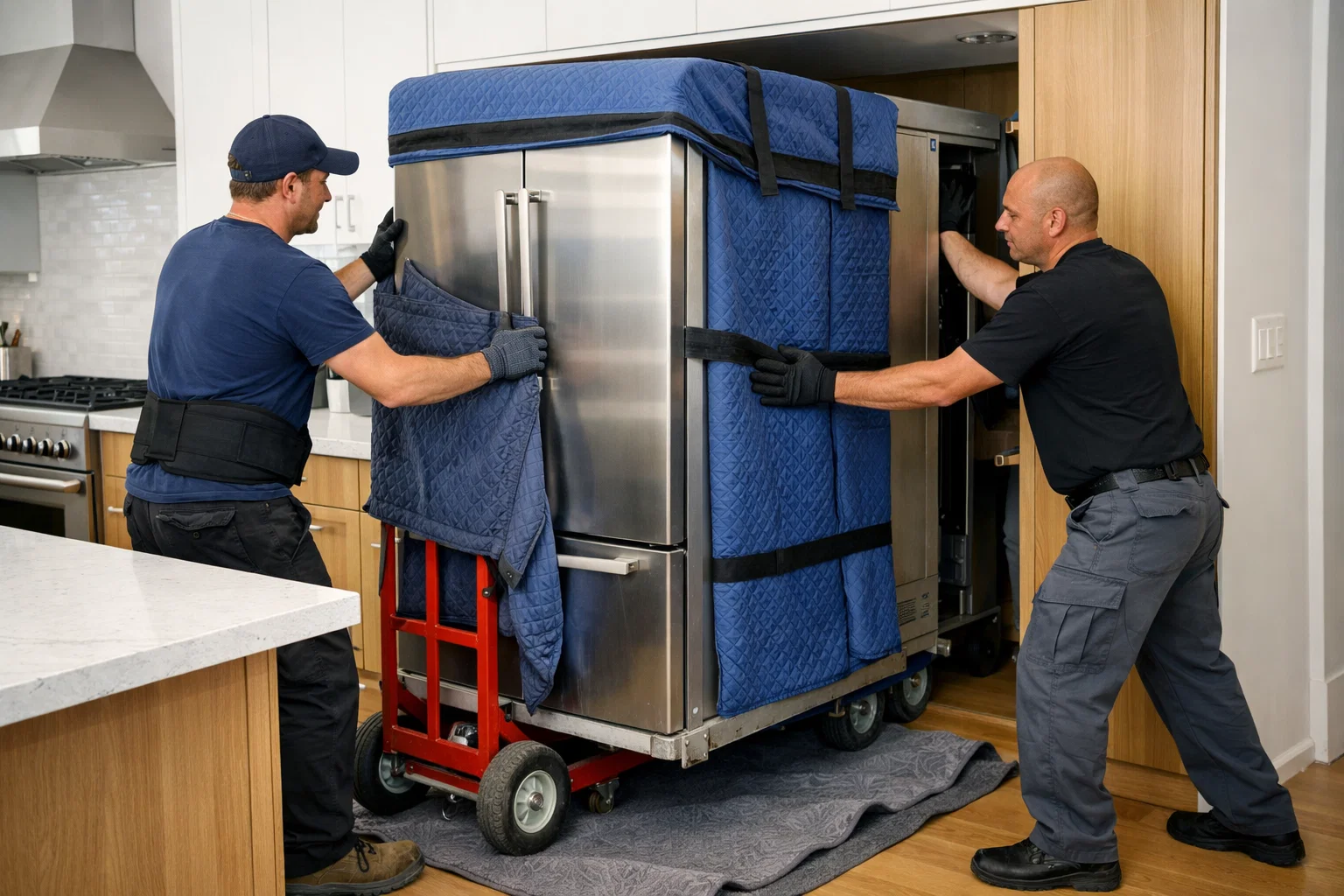
Once everything is disconnected, the next phase of the built-in refrigerator moving is sliding the unit out of the enclosure. This can be frightening since built-ins are very tight, as they can be as little as a few millimeters per side. Do not use your hands, but use a strong appliance dolly or glide tools. Slide it a bit and tilt it to not scrape cabinets or floors.
Fridges that are fitted in are quite heavy, and you will likely require two individuals. When walking, ensure that you check on the water lines and power cords to ensure nothing is trapped and that the cords are not too tight. Change gradually and progressively. It is suggested to never try to push it out. Stylish models can be quite specific with the lifting and tilting instructions, so better to consult the manual.
Transporting the Refrigerator
Once the fridge has been removed from the cabinet frame, it is time to move it safely across the house. Hardwood and tile floors are easily scratched, and therefore, moving blankets, sliders, or cardboard sheets should be used to create a safe path. Never place the fridge on its side unless the manufacturer tells you that it is safe. A good number of built-in cooling lines and compressors may rupture or be damaged once tilted too far. It is essential to maintain the fridge in an upright position to avoid the oil gushing into the coolant lines, which is a major cause of cooling issues following a relocation.
It may be safer to hire professional movers in case of the need to go down the stairs or cover a long distance. Built-ins may weigh between 400 and 600 pounds, which makes them risky to transport.
Reinstalling Your Built-In Refrigerator
The final step after the move is to ensure that the fridge is replaced in its proper position. Return it to its opening very slowly and watch how it fits. Hose water lines, power cord, and ventilation panels back in place. Proper airflow is essential. Inbuilt fridges require certain openings in the form of vents, which generally open at the top or bottom of the cabinets.
When a vent is blocked or inaccurately placed during the mounting, the fridge can overheat or cool differently. Always leave it in place before turning it on, a few hours later, or after it is placed in place, particularly when the fridge was tipped during the move.
When to Hire a Professional for Built-In Refrigerator Moving
While homeowners can handle smaller relocations, there are many situations where calling a professional for built-in refrigerator moving is the safer option. Luxury fridges have sensitive components, complex trim, and in-built systems which require professional maintenance. In case the relocation involves small corridors, stairs, or resettlement, a specialist ensures that the relocation process is completed effectively and safely.
Insurance for professional movers is also available, meaning that in case there is any accidental damage to the walls, cabinets, and the fridge, then they are insured. The price of a pro is trivial in most instances in comparison to the cost of repairing a bad move.
FAQs
Can I move a built-in refrigerator by myself?
Not recommended. Built-ins are extremely heavy, and moving them alone can damage the appliance or your home.
Do I need to shut off the water line before moving it?
Yes, always turn off and disconnect the water line first to avoid leaks.
Can a built-in fridge be laid on its side?
Generally no. Lying it sideways can damage the compressor and cooling system.
How long should I wait before turning the fridge back on after moving it?
Wait at least 2–4 hours, especially if it was tilted.
Should I remove the doors before moving?
Sometimes. Removing doors can make the unit lighter and easier to maneuver, depending on the model.